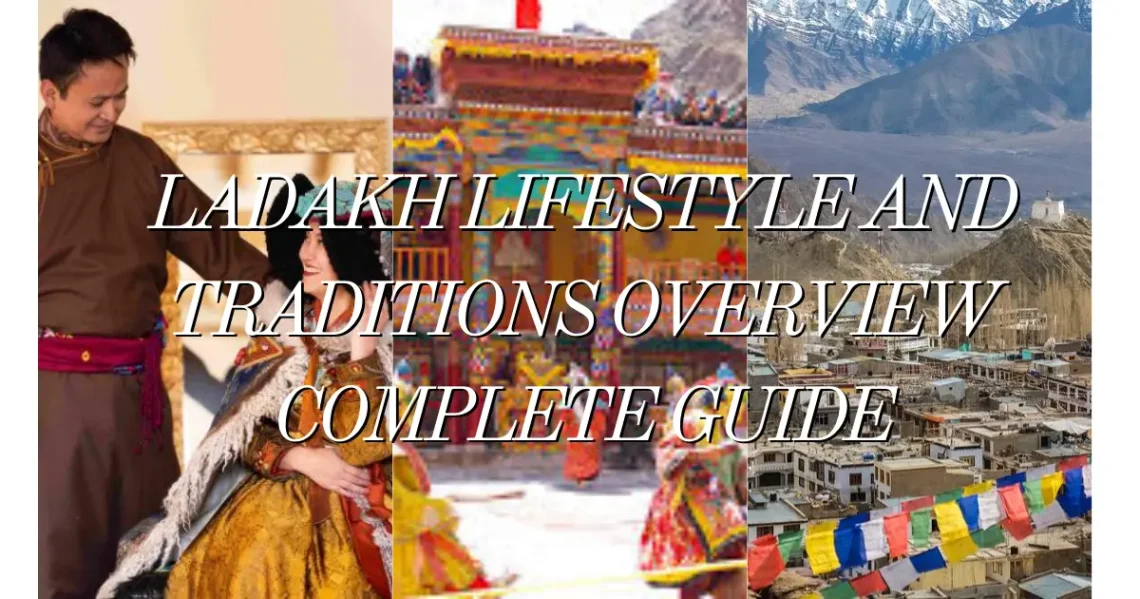

Introduction to Ladakh Lifestyle
Life in Ladakh isn’t like the busy streets of Delhi or the soft beaches of Goa. It’s slower, sometimes harsher, and yet strangely peaceful. When you first arrive, the cold dry air hits you, but so does the warmth of the people. The Ladakh lifestyle has developed over centuries in a high-altitude desert where winters can be very long and summers are brief but full of colour. It’s shaped by mountains, rivers, monasteries, and a shared sense of community that holds everything together. People here tend to know their neighbours by name, share work in the fields, and still celebrate age-old festivals with genuine enthusiasm.
What’s fascinating is how much of daily life is built around the environment. Water is precious, so it’s used carefully. Houses are designed to keep heat in and cold out. Food is simple but hearty – think of butter tea, barley flour (tsampa), and dishes you won’t find easily in other parts of India. Even the clothes reflect practicality: thick woollen gonchas and heavy boots for winter, lighter wraps for the brief summer months.
Yet, Ladakh isn’t a museum of old traditions. You can see smartphones and solar panels alongside prayer wheels and mud houses. Young people often travel to Leh for education, bringing back new ideas while still holding on to older values. That blend of old and new makes the Ladakh lifestyle feel alive rather than frozen in time. If you spend a few days here, you start to notice how this rhythm affects you too: mornings seem quieter, evenings stretch longer, and conversations feel less rushed. It’s a lifestyle that has evolved slowly, balancing survival, culture, and now, modernity.
Historical Roots of Ladakh Lifestyle
The story of Ladakh’s lifestyle really begins long before India as we know it today. This region sits at a crossroad between Tibet, Central Asia and the Indian subcontinent, so its culture is like a woven rug with threads from many places. For centuries, caravans carrying salt, wool, spices and even silk crossed through Leh, and each trader left a little bit of influence behind — in food, clothing, even the way houses were built. That’s why the Ladakhi kitchen smells faintly of Central Asian soups, and why their festivals echo Buddhist chants but also local folk songs.
Villages grew around monasteries, not markets. The monastery wasn’t just a religious space; it was also a school, a meeting hall, and sometimes even a granary during harsh winters. This shaped a lifestyle where spirituality and community blended naturally. People learned to value cooperation because survival in a cold desert demanded it. The irrigation systems (called khuls) that bring glacial meltwater to fields were built and maintained collectively, a practice still alive today.
Another root is the deep respect for the environment. In a place where resources are scarce, wasting water or food was never an option. Even now, you can see families storing barley in high granaries and drying vegetables on roofs for the winter. These habits aren’t just quaint traditions; they’re practical survival strategies passed down like family heirlooms.
This history explains why Ladakh feels both remote and connected at the same time. Its people carry old ways but are not cut off from the world. Understanding these roots helps you see that the Ladakh lifestyle isn’t random; it’s a patient response to geography, trade, and belief — a story still unfolding with each new generation.
Cultural Practices and Traditions
Culture in Ladakh isn’t something locked away in a museum; it’s in the way people greet each other, decorate their homes, and even plant their fields. Walk through a village on an ordinary day and you’ll hear the low hum of prayer wheels, the chatter of neighbours helping one another, and maybe children rehearsing for a local festival. These practices have been handed down for so long that they feel effortless, yet each one carries meaning.
Festivals are the heartbeat of Ladakh’s traditions. Losar (New Year) brings days of feasting and dances, Hemis festival fills monasteries with colourful masks and rhythmic drums, and even small village fairs bring people together after the hard winters. These events are not just for show; they’re a way of keeping relationships alive, renewing faith, and reminding everyone of their shared history. You’ll notice that during a festival, roles blur — monks, farmers, shopkeepers all gather as equals.
Family and community life also reflect these traditions. Marriages, births and even house-building ceremonies involve extended families and neighbours. Rituals are performed not only for good luck but also to keep a sense of continuity with ancestors. Even daily acts — lighting a butter lamp at dawn, offering tea to a guest before speaking — are part of an unspoken code of respect and hospitality.
What’s striking is how these practices have adapted to modern times. Young people may wear jeans during the week but switch to traditional gonchas for a festival. Smartphones might capture the dances, yet the chants are still sung in the same old tones. This blending of old and new keeps the culture from feeling brittle; it stays alive, flexible, and welcoming to outsiders who come with curiosity and respect.
Daily Life in Ladakh
A normal day in Ladakh looks quite different from a normal day in a city on the plains. Mornings often begin before sunrise, especially in rural areas. You might see smoke curling up from mud-brick chimneys as families light their stoves to make butter tea. The air is crisp, almost biting, but there’s a quiet rhythm to everything. Children prepare for school, sometimes walking long distances, while elders tend to animals or check irrigation channels fed by glacial streams.
Work is still strongly tied to the seasons. In summer, families are out in the fields sowing barley, peas, or mustard. You’ll hear the clink of sickles and the occasional laughter of neighbours working side by side. Winter is a different story — a time for repairing homes, weaving, storytelling and community gatherings. These cycles shape not just the economy but also how people pace their lives. They’re used to periods of intense work followed by long, reflective pauses.
In towns like Leh, daily life has taken on a more mixed character. Cafés and guesthouses open early, students rush to colleges, and shopkeepers line up their goods for tourists. Yet, even here, you’ll still see small rituals: a butter lamp lit in a shop corner, or a prayer flag fluttering above a rooftop. Hospitality is a constant. Guests are almost always offered tea, sometimes before a conversation even begins.
Despite modern changes, the core of daily life remains rooted in practicality and community. People share tools, exchange food, and help each other without keeping score. It’s a way of living that makes survival possible in such a demanding climate but also creates a sense of belonging that many visitors notice — and quietly envy — after spending a few days here.
Clothing and Handicrafts
One of the first things visitors notice in Ladakh is the clothing. It’s not just colourful or quaint; it’s a living response to the high-altitude desert. The traditional robe, called a goncha, is made of thick wool that locals spin and weave themselves. In winter, people wrap layers of felt and sheepskin underneath to hold in warmth. On their heads you’ll sometimes see the famous perak, a long hat studded with turquoise stones, which doubles as protection against sun and cold. Even boots are hand-crafted, usually from yak or goat leather, tough enough for snow but flexible enough to walk on rocky paths.
This clothing isn’t worn only on special days. In villages, many still use these garments for daily work because they last for years and are suited to the climate. In towns, you’ll see a mix — jeans with a goncha over them, or sneakers with a traditional hat — a small sign of how Ladakh blends old and new without much fuss.
Handicrafts are another window into the Ladakh lifestyle. Woollen carpets, hand-woven shawls, metal teapots engraved with Buddhist symbols, wooden utensils and painted thankas (scroll paintings) are common in homes. These aren’t just souvenirs; they’re part of daily living. A carpet keeps the floor warm, a hand-carved box stores barley flour, a painted cup brightens a plain room.
Making handicrafts is often a family or community effort. Women spin and dye wool, men carve wood or work with metal, and children learn by watching. In winter, when fields lie under snow, many families turn to weaving or embroidery for income. This tradition of self-reliance, where art and necessity meet, has given Ladakh a distinctive aesthetic — one where even everyday objects carry a story and a sense of place.
Food Habits and Local Cuisine
Eating in Ladakh is more than just filling your stomach; it’s a way of surviving the climate and staying connected to family and neighbours. Because the region sits so high and has such a short growing season, traditional meals are simple but very nourishing. The staple is barley (often roasted into flour called tsampa) mixed with butter tea or kneaded into dough. Butter tea, salty and rich, might surprise visitors at first sip, but for Ladakhis it’s a daily comfort that keeps them warm and hydrated in dry air.
You’ll also find thukpa (a noodle soup), sky (small wheat dumplings cooked with vegetables or meat), and momos (steamed dumplings) on most tables. These dishes came from Tibet centuries ago but have become local classics. In summer, fresh greens like spinach and peas are added, while in winter, families use dried turnip leaves or stored potatoes. Preserving food for the long cold months is an art: vegetables are sun-dried on rooftops, and butter or cheese is stored in wooden tubs lined with cloth.
Eating habits also carry a social flavour. Meals are often shared, and tea is poured before any conversation begins. During festivals, special breads and sweets are prepared, and neighbours exchange trays of food, a small ritual of connection. Even in Leh cafés, where tourists sip cappuccinos, you’ll often see a pot of butter tea on the counter for staff and family.
Modernity has brought packaged snacks and restaurants, but most Ladakhis still prefer home-cooked food. The balance of barley, dairy, and vegetables has kept people healthy for generations. To sit on a low carpet and share a bowl of thukpa with a Ladakhi family is to taste not just the cuisine but the patience and ingenuity behind it — a lifestyle distilled into a meal.
Housing and Architecture
Houses in Ladakh are a direct reflection of the land and the weather. Instead of glassy towers or cement flats, most traditional homes are built from sun-dried mud bricks and stones gathered from nearby hillsides. Thick walls keep out the cold winds in winter and the heat in summer. Windows are small and usually face south to capture as much sunlight as possible. Roofs are flat, not pitched, because they double as work spaces in the warmer months – you’ll often see apricots or vegetables drying there or children playing in the afternoon sun.
Inside, rooms are simple but purposeful. A large kitchen serves as the main living space, with a wood-burning stove at its centre. Low tables and carpets replace chairs, which makes sense when you’re conserving warmth. Shelves hold copper pots, prayer lamps and family heirlooms, all neatly arranged. Almost every house has a small altar or prayer room, a quiet corner for morning rituals.
Villages are often clustered on gentle slopes near streams, so homes can share irrigation channels and paths. You can see how much cooperation goes into even the placement of houses. In towns like Leh, newer buildings combine cement with traditional designs, adding larger windows or solar water heaters but still keeping flat roofs and thick walls. Monasteries and stupas, on the other hand, rise dramatically from cliffs or hilltops, their whitewashed walls and colourful murals a reminder of Ladakh’s spiritual life.
Architecture here isn’t about show; it’s about survival, community, and a sense of harmony with the landscape. Even with modern materials, many families still follow the old layout because it works. Walking into a Ladakhi home, you feel that blend of practicality and quiet beauty — a shelter shaped by centuries of mountain living.
Occupations and Economy
Because Ladakh sits so high up and so far from the big industrial centres of India, people have always had to shape their work around the land and the seasons. For generations, most Ladakhis were farmers and herders, cultivating barley, peas, mustard and keeping yak, sheep and goats. The land is tough, so fields are small and carefully irrigated with glacial meltwater. Families still work together at sowing and harvest, and animals provide wool, milk and sometimes transport over high passes.
Trade was another traditional occupation. Caravans used to pass through Leh on the way between Tibet, Central Asia and India, bringing salt, pashmina wool, spices and other goods. While the old caravan routes are quieter now, the habit of small trading lives on in local markets and roadside stalls.
Over the past few decades, tourism has become a major part of the economy. In summer, trekkers, bikers and pilgrims arrive in large numbers. Many families run guesthouses, guide services or cafés for extra income. Women’s cooperatives sell hand-woven rugs, apricot jam and herbal teas to visitors. This seasonal tourism has helped bring cash into remote villages but also changed the rhythm of work, with busy summers and quiet winters.
Government jobs, small businesses and education are also on the rise. Younger Ladakhis often go to Leh or even Delhi for college and come back as teachers, health workers or entrepreneurs. Still, the economy remains mixed — a bit of traditional self-reliance, a bit of modern cash work.
What stands out is the adaptability. Even as they adopt new occupations, most families keep a small field or a few animals, a kind of safety net that ties them to the land. It’s a balance between old and new, survival and opportunity.
Religion and Spiritual Life
Religion in Ladakh isn’t a separate compartment of life; it’s woven into almost everything people do. The region is predominantly Buddhist, though you also find Muslim and Christian communities, especially in certain valleys. Monasteries (gompas) crown hilltops and overlook villages like quiet guardians. They’re not only places of worship but also schools, libraries, and cultural centres. Children learn prayers and sometimes even basic reading and writing there. Festivals such as Hemis or Dosmoche are hosted at these monasteries, filling the courtyards with masked dances, horns, and drums — a living performance of spiritual stories.
Daily life reflects small acts of faith. Almost every home has a small altar or at least a butter lamp flickering in a corner. People spin prayer wheels while walking to work, hang prayer flags across rooftops and passes, and greet each other with a quiet “Juley” that carries warmth and goodwill. Even irrigation channels or new houses are sometimes blessed by monks before being used.
For Muslims in Ladakh, especially in Kargil and surrounding areas, the rhythm is shaped by the mosque, Friday prayers, and festivals like Eid. Despite differences, communities often help each other during celebrations or hardships, creating a sense of shared respect.
Spiritual life also shows up in attitudes: patience, hospitality, and a certain calmness even in tough conditions. Visitors often remark that Ladakhis seem unhurried, more present. That comes partly from a worldview that values impermanence and balance — lessons drawn from the mountains themselves.
Modernity has brought smartphones, colleges, and politics, yet the spiritual backbone remains. Young people may question rituals or adapt them, but the core values of compassion, community, and respect for nature still anchor Ladakh’s spiritual life. It’s less about rigid rules, more about a lived sense of connection.
Modern Influences on Ladakh Lifestyle
In just a few decades, Ladakh has shifted from a remote, almost self-sufficient region to a place connected to the wider world. Roads, mobile networks, and social media have reached even small villages. You now see children walking to school with smartphones in their pockets and tourists uploading pictures of monasteries in real time. This change has brought opportunities: better education, more healthcare facilities, and chances to earn cash incomes through tourism or government work.
Yet modernity doesn’t come without tensions. Younger people often find themselves caught between traditional expectations and new aspirations. Some leave farming altogether, choosing office jobs or studying in big cities. Families that once lived in joint households sometimes split into smaller nuclear units. Even festivals and rituals are being shortened or rescheduled to fit school calendars or tourist seasons.
At the same time, modern influences have improved quality of life. Solar panels dot rooftops, reducing dependence on scarce firewood. Eco-tourism projects teach visitors and locals alike about sustainable practices. New building techniques make homes warmer and stronger without losing the traditional look. Even food habits are slowly shifting — packaged snacks and instant noodles sit next to barley flour and butter tea in small shops.
What’s remarkable is how Ladakhis try to blend these influences rather than simply replace the old with the new. A young guide might wear trekking gear but still hang prayer flags at a pass; a family might use WhatsApp to coordinate harvest work. This balancing act keeps the culture from feeling brittle while allowing people to benefit from modern tools. It’s an ongoing experiment, sometimes messy, but also creative — a lifestyle still rooted in the mountains yet open to the world’s winds.
Sustainable Living in Ladakh
If you spend even a short time in Ladakh, you quickly see how “sustainability” here isn’t a trendy idea but a habit of survival. With a short growing season, scarce firewood, and limited water, families have learned over generations to stretch every resource. Houses are built from mud bricks and local stone rather than imported cement. Roofs double as drying spaces for vegetables. Water from glacial melt is channelled through khuls (irrigation channels) that are maintained collectively, ensuring no one uses more than their share. These practices were born out of necessity but now look like lessons for the rest of the world.
Waste has traditionally been minimal. Food scraps go to animals; old clothing is repurposed into rugs or insulation. Even prayer flags are made from cloth that eventually frays back into the soil. In the winter months, when travel is hard, people rely on dried vegetables, stored barley and butter, cutting down on imports and packaging. This frugality gives daily life a rhythm of reuse and care.
In recent years, NGOs and local leaders have tried to formalize these old habits into modern eco-projects. Solar cookers, compost toilets, and micro-hydel power plants now appear alongside traditional practices. Schools run by groups like SECMOL teach young Ladakhis how to build energy-efficient homes or run small green businesses. Tourists are encouraged to bring refillable bottles, respect water scarcity and buy local crafts instead of plastic souvenirs.
Of course, challenges remain. Increased tourism and packaged goods have added to waste problems in Leh and other hubs. But many Ladakhis see this as another moment for adaptation, not despair. Their everyday habits — conserving water, sharing resources, building with the land — still offer a grounded model of how a community can live lightly yet fully in a fragile environment.
Conclusion
When you step back and look at all the pieces — food, clothes, houses, festivals, work, faith — the Ladakh lifestyle feels like a tapestry woven from patience and adaptation. It has been shaped by a tough but breathtaking landscape, by centuries of trade and migration, and by a deep instinct for community. People here have learned to survive in a high-altitude desert not only through practical skills but also through rituals of sharing, hospitality, and spirituality. Even a simple act like pouring butter tea for a guest, or hanging prayer flags on a windy pass, carries that blend of necessity and meaning.
Yet Ladakh isn’t frozen in time. Roads, schools, and tourism have brought new jobs, new ideas, and new challenges. Young people wear jeans, use smartphones, and study far from home, but they also return for harvest, for festivals, for family gatherings. Solar panels sit on mud-brick roofs; WhatsApp messages coordinate traditional irrigation work. It’s an evolving story rather than a static postcard.
This mix of old and new gives Ladakh its unique flavour. Visitors often arrive expecting a museum of tradition and instead find a living culture, one that bends without breaking. The values that have sustained Ladakh — frugality, respect for nature, co-operation, spiritual grounding — are still visible under the surface changes. They’re not just “quaint customs”; they’re ways of keeping balance in a fragile environment.
If there’s one takeaway, it’s that the Ladakh lifestyle shows how tradition and modernity don’t have to be enemies. They can talk to each other, adapt, and create something resilient. Spending time here leaves many people quietly inspired, carrying a bit of that mountain calm and sense of connectedness back into their own lives.
FAQs
1. What makes Ladakh’s lifestyle unique?
It’s the mix of high-altitude survival, deep-rooted traditions, and a calm, cooperative spirit. People balance old customs with modern changes, creating a rhythm you don’t often see elsewhere.
2. How do Ladakhis cope with the harsh winters?
Families store dried vegetables, barley, and butter during summer. Homes have thick mud-brick walls to trap warmth, and everyone slows down a bit in winter, focusing on weaving, repairs, and community events.
3. What are the main foods people eat in Ladakh?
Barley (tsampa), butter tea, thukpa (noodle soup), momos, and dried vegetables are staples. In summer, fresh greens and apricots appear; in winter, preserved foods keep kitchens going.
4. Do traditional clothes still get worn every day?
Yes, especially in villages. The thick woollen goncha and boots are practical for the climate. In towns, people often mix modern clothing with traditional pieces, especially during festivals.
5. How important is religion in daily life?
Very. Monasteries are centres of learning and community. Prayer flags, butter lamps, and small rituals weave faith into ordinary routines, while Muslim communities also practice their traditions side by side.
6. Is tourism changing Ladakh’s lifestyle?
Tourism has brought income and education but also waste and faster rhythms. Many Ladakhis try to manage it sustainably, blending eco-projects with traditional hospitality.
7. What can visitors do to experience Ladakh respectfully?
Travel slowly, conserve water, avoid littering, buy local crafts, and ask before photographing people. A smile and a “Juley” greeting go a long way in showing respect.